
Friday Digital Roundup
The Friday Digital Roundup is a witty take on the weird world of the internet. With fun stories from around the globe, it’s the only email newsletter you’ll actually read and enjoy!
We do love writing it, but clearly not as much as people like receiving it - just look at the response we got when a technical hitch meant it wasn’t sent out on time!
@roisinduffyVA @roisinduffyva
@Spaghetti_Jo
Coffee and the FDR is how I start my Friday.
Do not engage until I have devoured both
Meschi Consultants @MeschiConsult
When it comes to the end of the week, there is no better way to start a Friday than with a run around the internet with Todd and Jo in the FDR. Just don't let them know I do it from the loo!
Kathryn Lynch-Smith @KikikatSmith
@Spaghetti_Jo
My inbox is full of rubbish newsletters that Im constantly deleting😬 My VIP inbox is for 1 thing only- THE DIGITAL ROUNDUP🤠I dont read a Newspaper or the news online, I just wait for Fridays, when this lands in my inbox- then I know ‘The weekend has landed’🤗
Get the Friday Digital Roundup and see what everyone’s talking about.
We may look like cowboys, but we’ll never abuse your data! Find out what we’ll do with it here, partner.
Spaghetti Blog
Friday 20th March 2026
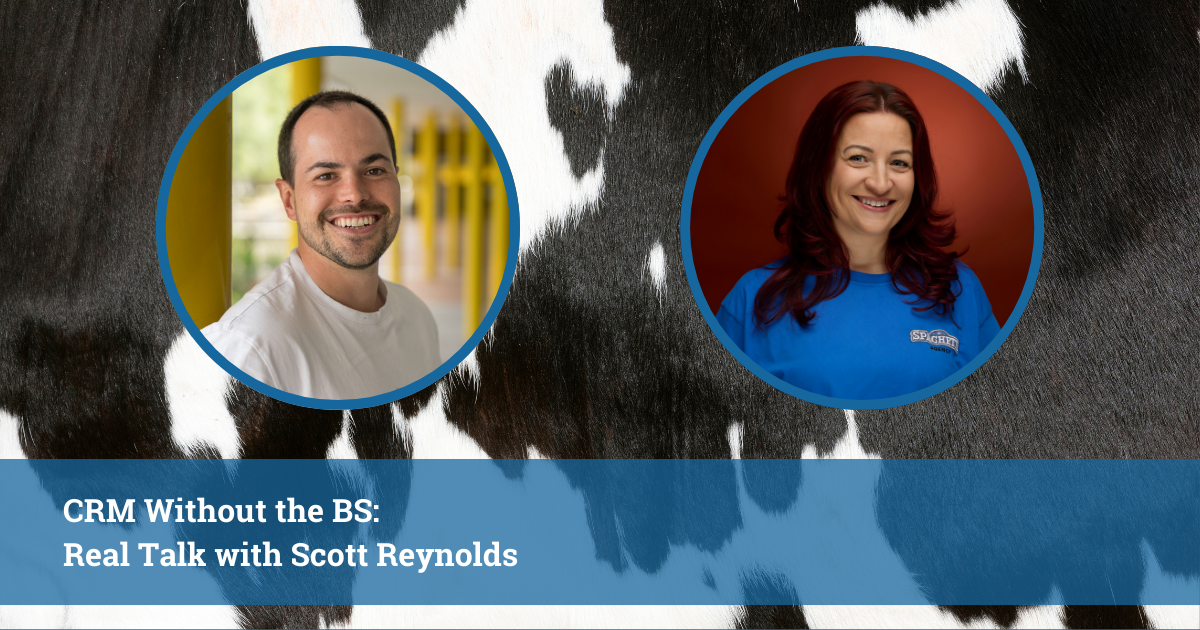
CRM Without the BS: Real Talk with Scott Reynolds
If you’ve ever groaned, “Our CRM’s a mess,” or wondered whether you really need one at all, you’re not alone.
Jo, our head cowgirl, caught up with Scott Reynolds, a CRM extraordinaire who knows a thing or two about what these systems actually do, why they go wrong so often, and how small businesses can use them without the headaches.
CRM Without the BS: Real Talk with Scott Reynolds
Q: Scott, how did you end up working in CRM?
Honestly, by accident. I studied sports technology at uni and got a dream job working for a hockey stick company. I was a hockey player, so it felt perfect. But after six months, they ran out of money and asked if I’d move over to their software company instead. I said yes (mainly because I wanted to keep getting paid!).
That’s where I got thrown into the deep end with Salesforce. It was my first exposure to a CRM, and I remember thinking, what on earth is this? It was complex, intimidating, and full of huge dollar values, but it sparked my curiosity. Over the next ten years, I worked my way through testing, project management, customer service, and eventually operations. That’s how I learned the ins and outs of CRM systems from every angle.
Q: For someone who’s never used one, what actually is a CRM?
At its simplest, it’s a fancy spreadsheet that keeps track of your customers. Who they are, what you’ve said to them, and what they’ve bought. But the real magic is when you use it as a process management tool.
It should help you move someone from being a prospect who’s “kind of interested” through to a happy, loyal customer who’s shouting about you to their friends
Q: And how do you define a “raving fan”?
Someone who promotes you without being asked. You know, when a friend says, “I’m struggling with my marketing,” and they instantly reply, “You need to speak to Jo. She’s brilliant.” That’s a raving fan.
Q: So, let’s bust some myths. What’s the biggest piece of nonsense you hear about CRMs?
That the software is the problem. People say things like “Salesforce doesn’t work” or “HubSpot is too complicated.” Nine times out of ten, it’s not the CRM, it’s the way it’s been set up.
I’ve seen people throw thousands of pounds at switching platforms when what they really needed was to tidy up their existing one. The tool isn’t broken, the setup is.
Q: And what’s the worst advice floating around out there?
“You need more data.” No, you need better data.
If you make your team fill in ten fields for every contact, you’ll end up with half-baked information in all of them. Ask for less but make it count. Every extra field is friction, and friction kills adoption.
Q: What do you say to small businesses who are still running everything from spreadsheets?
Spreadsheets are fine, until they’re not. They’re great for structure and proof of concept, but once you’ve got a few staff or a few hundred contacts, it all falls apart. You start losing track of who spoke to whom, when, and about what.
That’s when things slip, customers get frustrated, and you look disorganised. The tipping point usually comes around three or four staff members, that’s when you need to bite the bullet and invest in a proper CRM.
Q: What’s the worst CRM setup you’ve seen?
A huge multinational where I literally couldn’t add a test contact because the system was so locked down. It took them a week to generate test data. Another company had paid consultants to set up Salesforce, but the setup didn’t match how they actually worked, so the team went back to spreadsheets.
When I came in, I listened to how they liked to work and rebuilt their CRM around that. Once people felt heard, they were happy to use it. Listening is the secret weapon in CRM success.
Q: What are some quick wins for small businesses?
Start with reporting. If you can’t get clear, meaningful data out of your CRM, it’s not doing its job.
After that, use tools that save time like calendar links for booking meetings, or automatic email logging so nothing slips through the cracks. If your CRM integrates with your website to show who’s been browsing what, that’s gold dust for follow-ups.
Q: Why do people resist getting a CRM?
Many people think they’re too difficult to use and that makes them scared to try. People hear horror stories, or they’ve tried one before that was set up badly. And if you don’t have clear business processes, it’s really hard to make a CRM work because you’re trying to automate chaos.
Q: How do you get teams on board with using it?
I run what I call a User Engagement Workshop. We get everyone in a room (or on a Miro board) and ask:
- What do you like or hate about the current setup?
- What processes are you managing day-to-day?
- What tools do you already use?
When people help design the system, they actually use it because it feels like theirs, not something forced on them from above.
Q: What’s the most common mistake businesses make?
Spending all their budget on licences and nothing on implementation. The software is only half the story; the other half is tailoring it to how your business works.
Every bit of data someone enters should give them something back; a report, a reminder, an easier day. Otherwise, it just feels like admin… and who wants more of that?
Q: AI and CRM — hype or reality?
Right now? Mostly hype. But it’s coming. Eventually, we’ll stop “logging in” to CRMs and the data will come to us, surfacing insights inside email, Zoom, Slack, wherever we’re already working. Data entry will be automated, and AI will help fill in the blanks.
For small businesses, I’d say start experimenting with tools like ChatGPT or Gemini. The big CRM AIs like Salesforce Einstein or HubSpot AI are still more geared towards enterprise-level setups.
Q: So what should small businesses do now to prepare for that future?
Get your data in shape first as AI is only as good as the information you give it. Make sure everything connects to one reliable, central CRM. Start small, stay consistent, and let your system grow with you. At the end of the day, the best CRM is the one you’ll actually use.
Q: One last takeaway for small business owners?
Know what you’re aiming for and figure out which numbers actually show you’re heading in the right direction. Don’t wait for the perfect set-up as that just doesn’t exist and remember that every bit of unnecessary data is just dead weight. So get started, stay consistent, and tweak as you grow!
Q: And finally — if CRMs were biscuits, which one would yours be?
A chocolate digestive. Simple, reliable, and no fuss but just a bit better than plain!
So there you have it folks. CRMs don’t have to be complicated or full of pointless boxes to tick. When they’re set up properly and built around how you actually work, they can make life a whole lot easier and keep your customers coming back for more.
Need help with your marketing? Give the cowboys at Spaghetti Agency a holla and let’s talk about how we could work together.
Do You Struggle to Create Content to Generate Sales?
We’ve Created a FREE Online Marketing Plan…
Use our simple ideas generator to help you make better content, over and over again…
Tags associated with this article
Post a comment
We'd love to know what you think - please leave a comment!
99 Simple Marketing Tips
99 Simple Marketing Tips You Can Use to Treble Your Business
Struggling to know where to start with your digital marketing?
We’ve got a tonne of ideas that you can put in place for your marketing – directly from our past 8 years growing an engaged following and strong business.
What You’ll Get
- #ToddsTips
- 4Networking
- AI
- Blogging
- Brand
- Business
- Content
- Content Marketing
- Copywriting
- Digtial Marketing Trends
- Email marketing
- Facebook Ads
- Facebook Groups
- Facebook Live
- Google Adwords
- Hashtags
- How to
- Marketing
- Networking
- Outsourcing
- PPC
- PR
- Press Releases
- Proofreading
- SEO
- Social
- Social Media
- Spaghetti Agency
- Storytelling
- Technology
- Uncategorised
- Video
- Video marketing
- Vision
- Websites
- Workshops
- YouTube




0 comments on this article